
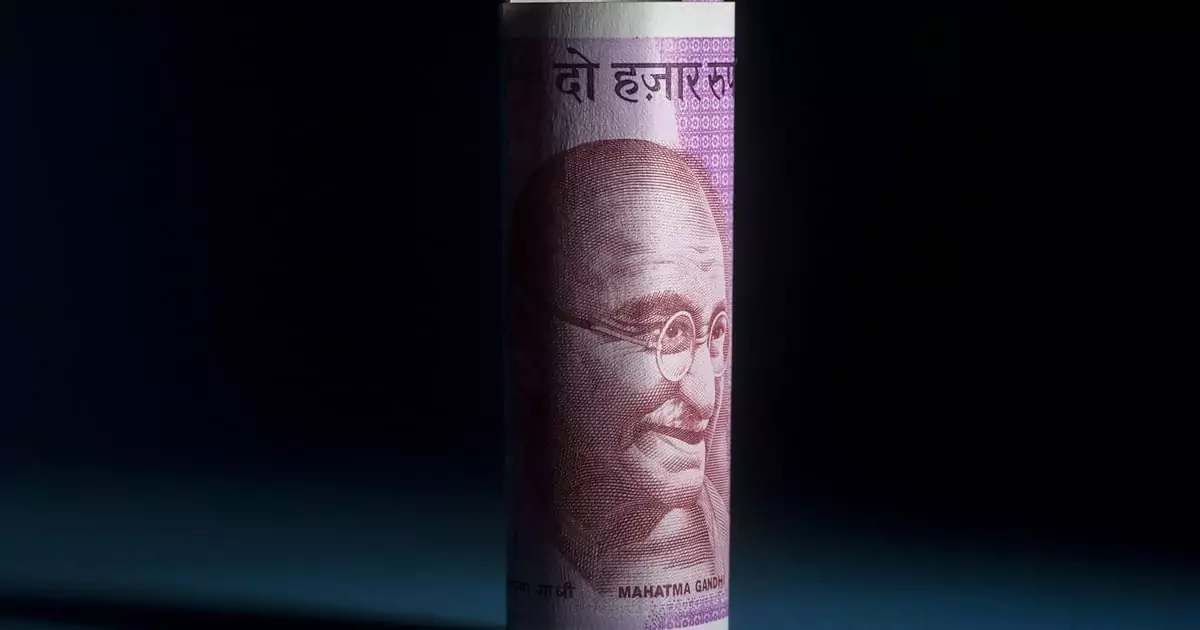
Indian Rupee falls to all-time low of 89.61 against USD due to US-India trade uncertainty and heavy foreign portfolio outflows. RBI’s lower intervention and rising import demand add pressure.
- Silver Price Forecast: Double-Top Shows Weakness, But Overall Trend Still Bullish
- Euro Struggles: EUR/USD Slides as Dollar Strengthens Again
- MCX Gold Below ₹ 1,21,900: No Buying at All, Says Neal Bhai | Key Levels & Market Outlook
- Nifty Near Record High | Bulls Take Charge as Bears Get Pushed Out
- EUR/USD Holds Ground as Dollar Stumbles Amid Historic US Government Shutdown
- USD/INR Dips: Fed Hints at September Interest Rate Reduction
Rupee Record Low 2025
The rupee tumbled to a fresh lifetime low on Friday, pressured by heavy foreign portfolio outflows, lingering uncertainty over a potential US-India trade deal, and a perceived scaling back of the Reserve Bank of India’s (RBI) defence of key levels.
The currency registered its steepest single-day fall in over three months, breaching the 89-per-dollar mark for the first time. It closed the session 93 paise weaker at 89.61 (provisional) against the US dollar, sliding past its all-time low of 88.8 recorded in late September and earlier this month.
Market observers now anticipate the rupee could test the psychologically significant 90 level if trade negotiations remain unresolved. The weakness comes despite India’s broader economic fundamentals staying resilient, with equity markets hovering near record highs.
US Tariffs
Since late August, when steep US tariffs on Indian exports came into effect, the rupee has struggled to regain its footing. The tariffs have weighed on trade flows and widened India’s merchandise trade deficit, which hit a record high last month. Exports to the US fell 9 per cent year-on-year, underscoring the strain on bilateral trade.
Foreign investors have also turned risk-averse, withdrawing $16.5 billion from Indian equities so far this year. This makes India one of the worst-hit emerging markets in terms of portfolio outflows, further exacerbating pressure on the currency.
According to a Reuters report, traders anticipate the Reserve Bank of India, which had actively defended the 88.80 level in recent sessions, appeared to have scaled back its defence and instead likely stepped in near 89.50 on Friday.
USD/INR
“USD/INR broke decisively above 89, a level many importers and dealers believed the RBI would defend. Once this perception failed, aggressive short-covering kicked in across onshore and offshore markets, triggering stops and amplifying the upside move. In the near term, a combination of risk-off flows, a firmer US Dollar Index, and trade-deal uncertainty keeps the bias upward, potentially testing the 90 mark. For now, traders are watching a broad spot range of 88.7–90.3,” said Anindya Banerjee, head of research – currency, commodity and interest rate derivatives, Kotak Securities.
RBI governor Sanjay Malhotra on Thursday said that the central bank has not set any target for the rupee’s exchange rate against the dollar, stressing that market dynamics drive currency movements.
The rupee is among the weakest performers in major Asian currencies this year, down 4.5 per cent year-to-date.
Summary:
The Indian Rupee fell to a new lifetime low of 89.61 against the US Dollar on Friday. This happened because of ongoing problems in the US-India trade talks and large amounts of foreign money leaving Indian markets. The Reserve Bank of India (RBI) did not stop the fall this time as strongly as before. Importers bought more dollars while exporters stayed quiet, adding to the pressure on the rupee. Experts say the rupee might fall close to 90 if trade talks do not improve soon. Despite this, India’s economy is still strong overall.
| Follow us on |
| Telegram, Whatsapp , Facebook, Twitter, Instagram, YouTube, Google Business Profile and Truth Social. |