
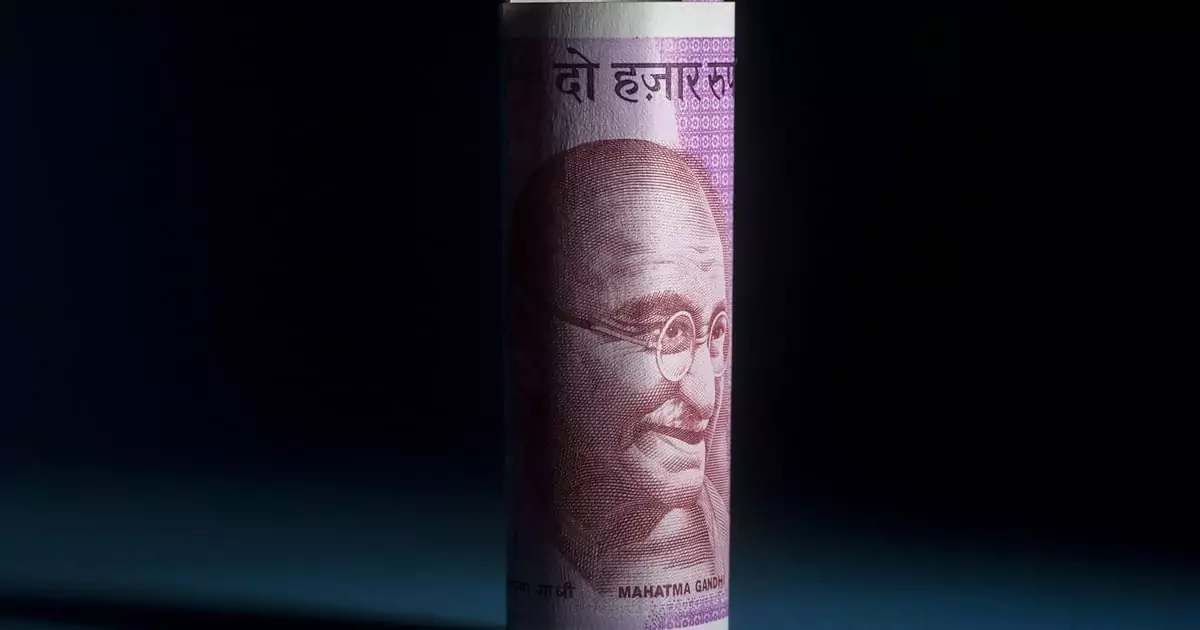
The rupee sank to a record low against the US dollar on December 3, briefly breaching the psychological 90 mark before settling just below it. The downward move was driven by weak foreign flows, large offshore positioning and uncertainty around a US-India trade deal.
- Copper Prices Jump to Four-Month High as Supply Gets Tight — Prices Set for More Upside
- Wockhardt Share Jumps 19% on Heavy Buying — Why the Pharma Stock is Rising Today
- Spot Silver Above $56.10: Big Target $60–$62; MCX Silver Hits Fresh 52-Week High
- MCX Copper Price Forecast: Buy or Sell? Neal Bhai Explains the Next Big Move
- Copper Price Jumps to All-Time High: Why Is Copper So Expensive Now?
The rupee has been steadily falling for some time, with several sessions of losses in a row in the past few days. In recent weeks, it has repeatedly breached previous lifetime lows, leading to a renewal of the off-and-on debate on capital flows and RBI intervention.
While one single down-move might not be decisive by itself, the rupee’s surrender of the key mark has put the spotlight firmly on a policy challenge that stares India in the face: how to prevent such episodic shocks from becoming a structural weakness.
Market experts, meanwhile, see significant possible movement for the currency in the short term. Some of them have cited 90.5 against the next important level for the rupee, while some others even see it nearing 92 levels in case there is no early settlement of India-US trade uncertainties.
Anindya Banerjee of Kotak Securities said that if the rupee closes above 90, there could be more speculative moves. Dhiraj Nim of ANZ told CNBC-TV18 that while the rupee might go up to 91.5 against the dollar by the end of 2026, he also expected the US currency to fall by 4-5% over the year.
On the other end of the spectrum, there is this belief that the rupee’s fall is likely to halt and even reverse in case there is some concrete positive news on the India-US trade deal, VK Vijayakumar, Chief Investment Strategist, Geojit Investments, said.
Factors behind the fall
In the rupee’s consistent weakening, three factors have been central.
First, foreign portfolio outflows. Overseas investors have been withdrawing funds from Indian equity and debt markets, leaving a net negative flow that increases demand for dollars. That pressure shows up most directly in the spot and non-deliverable forward (NDF) markets.
Second, importer demand and the unwinding of NDF positions. Importers buying dollars to pay for goods and the maturity of large short positions offshore have both amplified downward moves in the rupee. Dealers say such technical and trade-related flows can push the currency sharply over short periods.
Third, geopolitical and policy uncertainty. Delays or uncertainty over the bilateral trade agreement with the United States have been cited by market participants as a negative for sentiment and capital inflows, weakening the rupee even as other fundamentals have remained mixed.
The breaching of the 90 level happened despite RBI’s intervention in the forex market to slow the slide. According to forex market analysts, measures such as dollar sales and short forward positions were used by the RBI to prevent the rupee slide past the psychological barrier.
What awaits businesses & households
Import bill: A weaker rupee raises the rupee price of imports. That matters for oil, fertiliser and many other key industrial inputs. Higher import bills lead to a widening of the trade deficit and, in turn, keep the currency under pressure.
Consumer prices: If import-intensive costs are passed through, consumers may see higher prices for fuel, a number of food items and electronics. The degree of pass-through depends on corporate margins, inventory buffers and how long the rupee’s low levels persist.
Corporate earnings and markets: Exporters gain competitive advantage from a cheaper currency, while companies with dollar-denominated debt face higher repayment costs. Stock markets often react: sometimes positively because exporters’ profits rise, sometimes negatively because of broader risk aversion and higher costs of imported input.
Cost of hedging: When the rupee weakens, hedging costs rise. Derivative prices used by firms to hedge currency risk reflect the market’s view and can make forward cover more expensive for businesses. That raises the cost of protecting margins.
Questions for broader economy
Inflation versus growth: When the rupee falls, the RBI is left weighing the inflationary effect of a weaker rupee against the need to support growth. Higher imported inflation can force the central bank to be cautious on easing policy. At the same time, aggressive tightening to defend the currency could slow domestic recovery.
Forex management: The RBI’s use of foreign exchange reserves to smooth volatility has been a standard practice. However, this approach comes with its own risks when the fall is sharp and/or protracted as repeated interventions can hurt RBI’s firepower.
According to analysts, the central bank’s sizeable forward positions and occasional dollar sales indicate a preference for managing volatility rather than permanently fixing the rate.
Apart from the obvious impacts on the economy, there are some structural issues at stake as well. The rupee’s fall past the psychological barrier has brought focus back on a number of long-term, persisting aspects — such as the need for deeper and more stable capital flows, better export competitiveness and better diplomacy that can reduce trade-related uncertainty.
Two sides of the coin
If the rupee keeps up the suspense, the govt and the RBI will have to keep a keen eye on a number of matters that’s either make things or mar them, such as:
Foreign portfolio inflows: A sustained return of investor appetite for Indian assets would reduce dollar demand and stabilise the rupee. A lack thereof, on the other hand, will make matters worse for India going forward.
Oil and commodity prices: A rise in global crude prices would add to import pressure. Conversely, easing oil can ease the strain on the external account.
Trade developments: Any material progress on large trade agreements or a reversal in global risk sentiment would affect cross-border flows and the exchange rate.
Market participants, for now, will have to keep a close watch on the RBI’s actions. The central bank’s statements about tolerance for volatility, the scale of its interventions and the mix of the tools it uses, will shape the market’s mood and momentum from here on.
So, what’s the final word?
A weaker rupee is not inherently good or bad. It redistributes gains and losses across the economy: exporters, importers, consumers and savers feel the effects of rupee volatility differently.
A weaker rupee, in some instances, can be a positive. It can boost India’s exports by making Indian goods cheaper in foreign-currency terms, helping exporters to compete internationally. Low-import sectors like textiles, garments, handicrafts and similar industries often benefit the most: a 4–5 % rupee drop can translate into a roughly 10% increase in export volume — assuming input costs remain stable.
However, there is a caveat too: companies that rely heavily on imported inputs may see these advantages offset, sometimes very significantly, since import costs rise when the rupee weakens.
A weaker rupee can benefit India’s services exports — such as IT services, software, and business-process outsourcing — by increasing the rupee value of dollars earned abroad, making revenues more profitable in rupee terms.
This improves competitiveness globally and encourages foreign clients to use Indian service providers, since dollar-priced services become relatively cheaper.
Lower rupee also helps generate foreign exchange earnings and supports job creation in India’s labour-intensive service sectors.
However, as experts note, the benefit may be offset here too, if service providers depend on imported inputs or have foreign-currency costs.
For now, the rupee at or near 90 is a warning signal that external conditions and investor sentiment remain important determinants of India’s near-term economic path.
The immediate question, more than anything else, seems to be one of stability. The key is to watch whether these near-term pressures will settle or persist. The RBI and the govt will have to act with balance: limit disruptive volatility while avoiding measures that harm the recovery.
The bigger worry now, according to Geojit’s Vijaykumar, is — will the rupee fall even further, as the RBI is not being seen intervening adequately to support it? That worry is driving foreign investors to keep selling even as India sees sentiment improving amid a better-than-expected GDP print and the economy’s fundamentals getting back on track, he said.
| Follow us on |
| Telegram, Whatsapp , Facebook, Twitter, Instagram, YouTube, Google Business Profile and Truth Social. |