
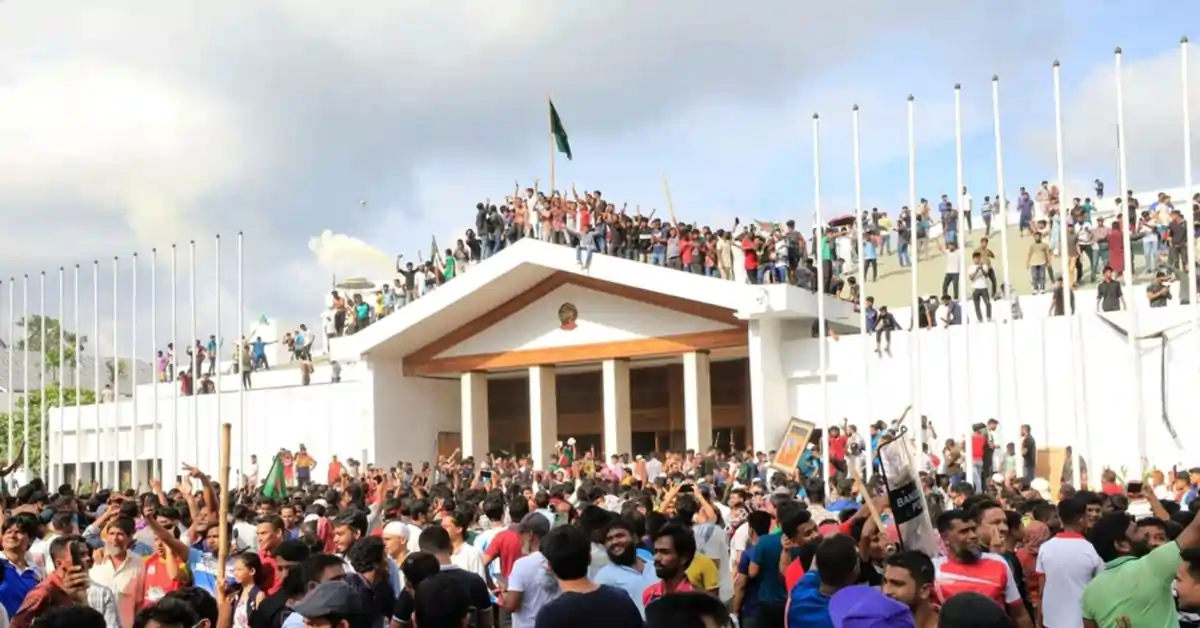
Bangladesh sheikh Hasina (Seeks Hasina) Return: Former Bangladesh PM Sheikh Hasina was sentenced to death in absentia Monday for the violent 2024 student crackdown by a special tribunal in a verdict that she described as a foregone conclusion. Chief adviser Muhammad Yunus hailed the verdict, saying no one is above the law.
- Winners & Losers of the Trump–Xi Truce: The Calm Before the Next Trade Storm?
- US Govt Shutdown Day 4: Trump Freezes Funds for Blue States, GOP Voices Unease
- Trump aide accuses India of ‘intransigence’ amid tariffs: ‘If Indians don’t budge, then
- Will Peace Finally Come to Ukraine? Trump and European Leaders Push for Putin Zelensky Meeting
- Trump Pushes for Peace Talks in Russia-Ukraine Summit
Death Penalty Verdict Shocks Nation as Dhaka Seeks Hasina’s Return
India responded to Hasina’s sentencing with caution, saying it had taken note of the verdict of the ‘International Crimes Tribunal of Bangladesh’, and, as a close neighbour, remained committed to the best interests of the people of Bangladesh, including in peace, democracy, inclusion and stability in that country.
“We will always engage constructively with all stakeholders to that end,’’ said the external affairs ministry, giving nothing away on Dhaka’s renewal of its demand, immediately after the sentencing, to extradite the deposed PM who remains in India.
2013 treaty with Dhaka states extradition can be refused if offence for which it is sought is of a political character The Indian govt has so far only acknowledged the interim govt’s call for Hasina’s extradition, while remaining non-committal on what it proposes to do about it. That has been its position since Dec last year, when Dhaka officially sought her extradition.
Indian government responds
Ministry of External Affairs said in a statement issued on Monday (November 17, 2025) that Indian government noted the verdict announced by International Crimes Tribunal of Bangladesh concerning former PM Sheikh Hasina.
MEA said,” India remains committed to best interests of people of Bangladesh, including in peace, democracy and stability.”
MEA added that Indian government “will always engage constructively with all stakeholders considering best interests of people of Bangladesh.”
Hasina Sentenced to Death, Bangladesh Govt Demands Her Extradition
The 2013 extradition treaty with Dhaka in any case may provide immunity to Hasina from any political witch hunt. Article 6 of the treaty states that extradition can be refused if the offence for which it is requested is of a political character. While Dhaka will argue that the same article excludes murder from the list of such offences, Article 8 also states that a person may not be extradited if s/he can convince the requested state that the accusations were not made in good faith “in the interests of justice”.
Death Sentence for Hasina: Dhaka Moves to Bring Her Back
In short, extradition would be a complex and long-drawn-out process and, for India, entail both legal commitments and geopolitical considerations. The sentencing will likely only add another layer of complexity to Hasina’s case. As an aspiring great power, India would not like to be seen as giving up on a long-time ally who remained attuned to India’s economic and security interests, not least by keeping in check radical Islamists. Abandoning Hasina would also not just demoralise Hasina’s party Awami League, which is facing a ban from participating in the upcoming national elections, but also energise radical anti-India forces.
The unelected interim govt has also done little to assuage India’s concerns about increasing radicalisation and safety and security of minority communities. New Delhi also knows that Dhaka’s ongoing efforts to revive the relationship with Islamabad can act as a real conundrum for India soon, even as it engages the interim govt by hosting the Bangladesh NSA for a security conclave this week.
More than the fate of Hasina, perhaps, India will be concerned about what the verdict might mean for Awami League as it seeks free, fair and inclusive polls in the country. Hasina told TOI last week that the ban came from an unelected cadre that seized power and now wanted to take its political opponents out of the game.
“It was Awami League that introduced key reforms to ensure transparency and fairness, including the use of photo-based voter lists, see-through ballot boxes, and the establishment of an independent election commission. There is an irony that the only party which ensured free elections is now barred from participating,” she said. For India too, it’s imperative that Awami League be allowed to contest elections that are genuinely fair and inclusive.