
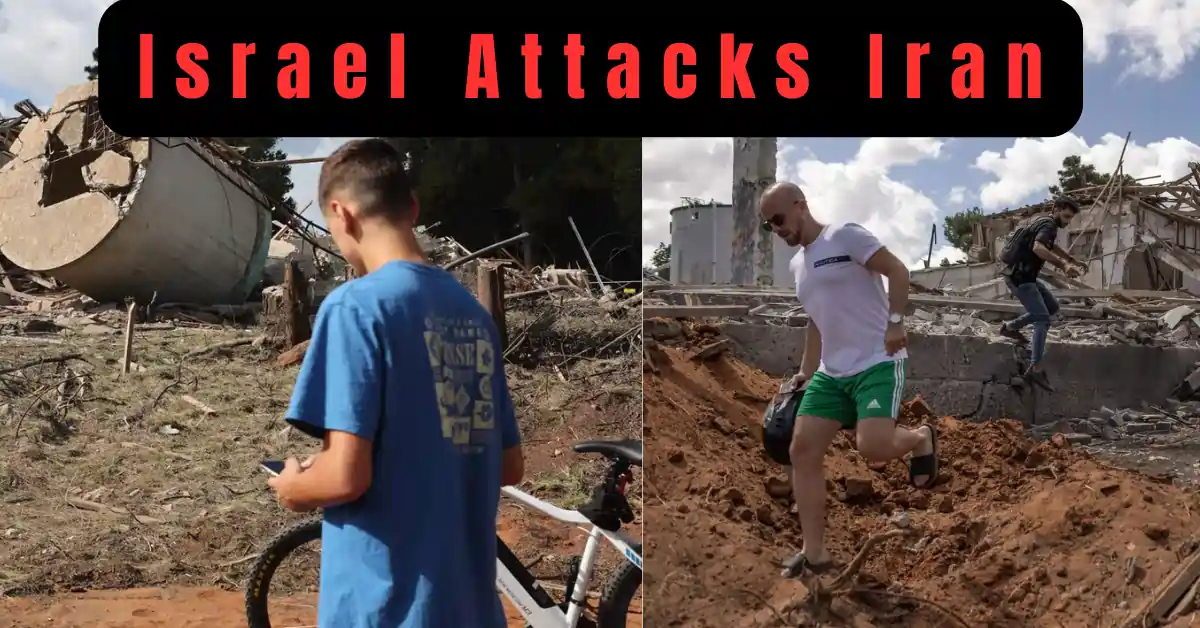
Iran Rejects Trump Ceasefire Plan: Iran has refused the ceasefire proposal given by US President Donald Trump, increasing tensions in the Middle East just before a strict deadline related to reopening the Strait of Hormuz.
The conflict has now entered its fifth week, and global concerns are rising due to its impact on oil supply and regional stability.
Iran’s 10-Point Response to the US
According to reports, Iran shared a detailed 10-point response. Key demands include:
- Complete end to regional conflicts
- Safe and secure passage rules in the Strait of Hormuz
- Removal of international sanctions
- Financial support for reconstruction
Iran clearly stated that it will not accept pressure or threats while discussing peace.
Trump’s Strong Warning Before Deadline
Donald Trump had set a deadline of Tuesday evening (US time) for reopening the Strait. He warned that failure to comply could lead to attacks on Iran’s energy and infrastructure.
The Strait of Hormuz is extremely important because it carries more than 20% of the world’s oil supply. Any disruption here affects fuel prices globally.
Global Energy Crisis Worsens
After the conflict started, Iran effectively blocked the Strait following joint actions by the US and Israel.
Fatih Birol, head of the International Energy Agency, said this situation is worse than the oil crises of the 1970s.
Countries around the world are already facing rising fuel prices and supply shortages.
Pakistan’s Peace Plan Efforts
Pakistan reportedly introduced a two-step peace plan:
- Immediate ceasefire talks
- Final agreement within 15–20 days
However, Iran rejected the proposal, saying negotiations cannot happen under threats.
Iran also refused to reopen the Strait immediately, which remains a major demand from the US.
Iran’s Own Demands for Peace
Iran has instead put forward its own conditions:
- Permanent ceasefire guarantee
- No future attacks by US or Israel
- Removal of US military bases in the region
- Compensation for war damages
- Full control over the Strait of Hormuz
These demands were described as necessary for long-term peace.
Continued Attacks Despite Talks
Even while talks were ongoing, both sides continued military action.
- Israel targeted Iran’s South Pars petrochemical facility
- Iran reported the killing of intelligence chief Majid Khademi
- Israel claimed it eliminated a key Iranian military leader
This shows the situation on the ground is still very serious.
‘Hormuz Will Never Be the Same’
Iran’s Revolutionary Guard has warned that the Strait of Hormuz will not return to normal, especially for the US and Israel.
Iran is also planning new rules, including charging tolls for ships passing through the Strait.
This could change global trade and oil transport in the coming months.
Conclusion
The rejection of the ceasefire proposal has increased uncertainty in the Middle East. With rising tensions, continued attacks, and no agreement yet, the global energy market remains under pressure.
The coming days will be critical in deciding whether the situation improves or worsens further.
FAQs
Why did Iran reject Trump’s ceasefire proposal?
Iran rejected the proposal because it included pressure, deadlines, and did not guarantee long-term peace or safety.
Why is the Strait of Hormuz important?
The Strait handles over 20% of the world’s oil supply, making it one of the most important trade routes globally.
What was Trump’s deadline about?
Trump set a deadline for Iran to reopen the Strait, warning of strong military action if ignored.
What role did Pakistan play in peace talks?
Pakistan proposed a two-step peace plan, but Iran rejected it due to ongoing threats.
How is this conflict affecting the world?
The conflict is causing a global energy crisis, increasing oil prices, and creating economic uncertainty.